Deployment data closes the robot learning loop
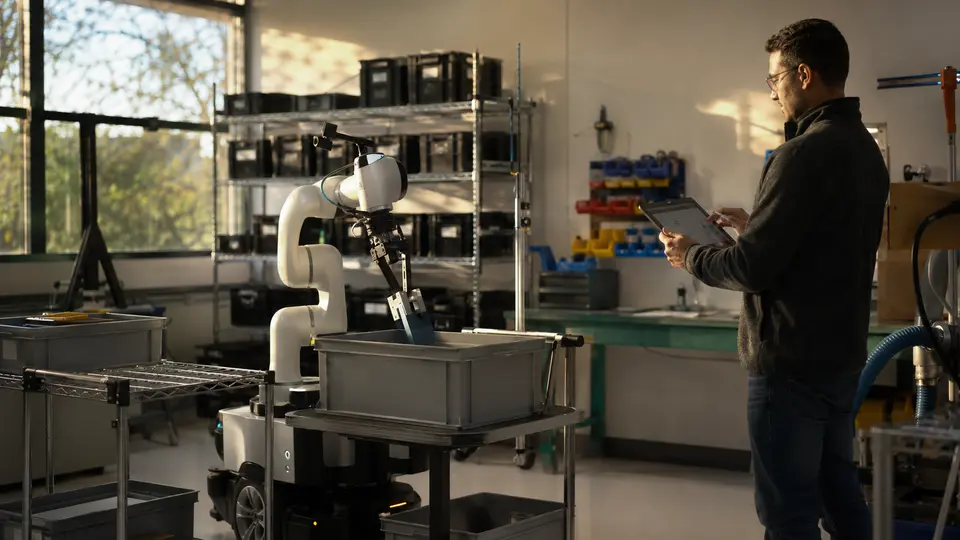
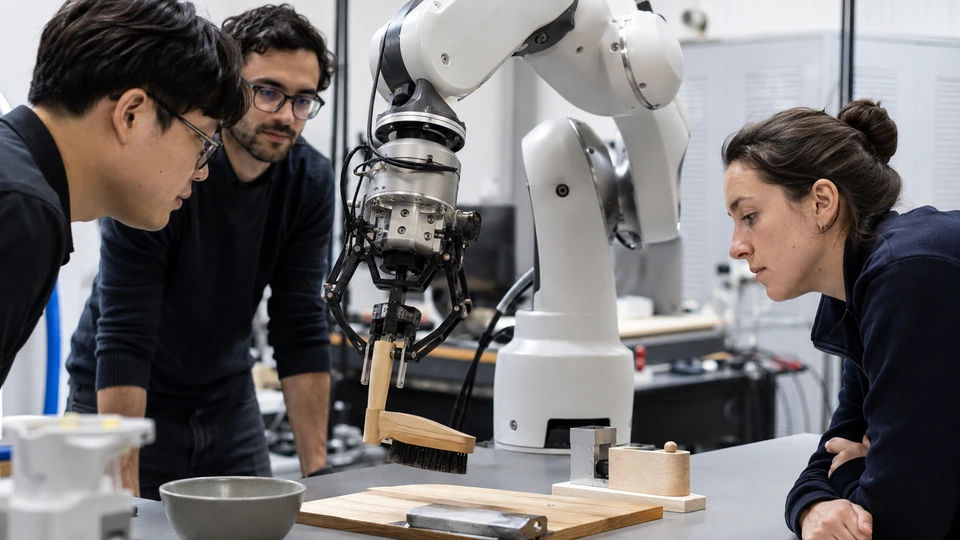
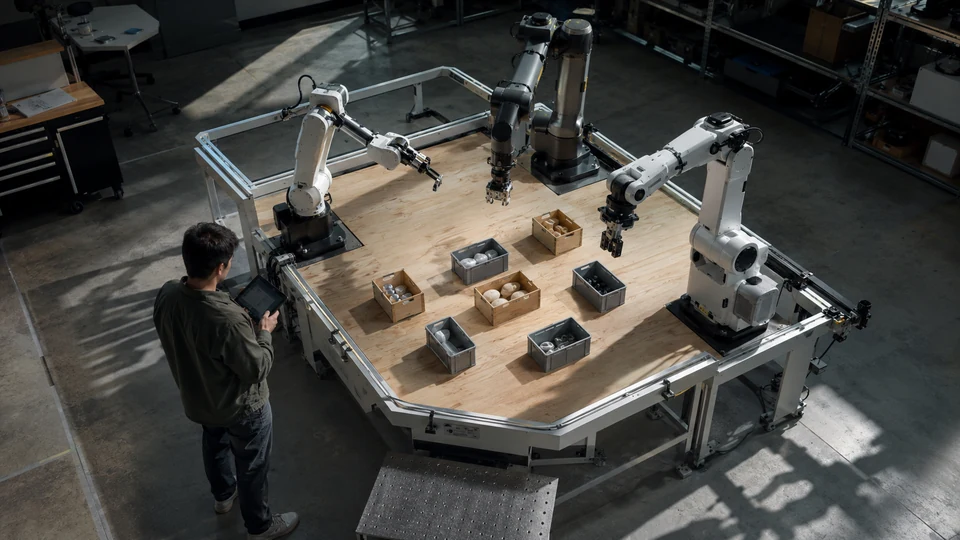
The reported partner deployments combine autonomous work, human intervention and new operational data across varied real settings.
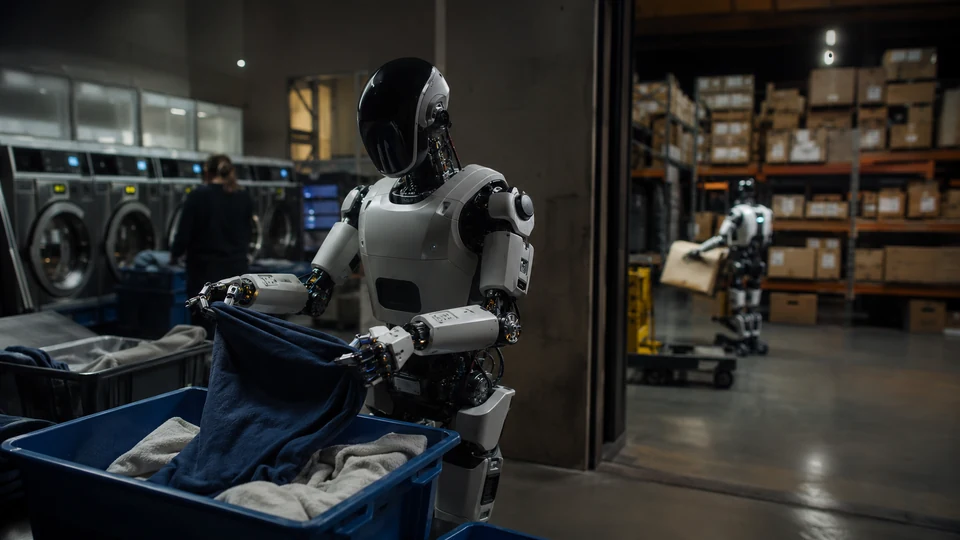 FUURAA original conceptual visual
What the evidence indicates
The Core Argument of “The Physical Intelligence Layer”
The reported partner deployments combine autonomous work, human intervention and new operational data across varied real settings.
FUURAA Editorial Analysis
Reading “The Physical Intelligence Layer”: Can Deployment Data Close the Robot Learning Loop?
The most important element in the partner report is not a single autonomy percentage. It is the proposed operating loop: deployments expose edge cases, people keep the service correct, reviewed experience becomes training data, and a later model returns to the field. This loop can create durable advantage, but only when data quality, consent, safety, evaluation and incentives are engineered rather than assumed.
The Core Argument of “The Physical Intelligence Layer”
A robot deployment produces information that a laboratory dataset often misses: unusual garments, packaging variation, changing workstation layouts, worn components, ambiguous instructions and sequences of small errors. Physical Intelligence's partners describe humans intervening when the system fails and partner data entering pre-training or adaptation. The report associates partner data with fewer missed grasps and interventions at Weave and with higher throughput at Ultra. This supports the idea that deployment can improve a later system. It does not show that raw operation automatically creates learning. Someone must detect the event, preserve the relevant observations and actions, distinguish operator rescue from model success, label the outcome, review safety and decide whether the example belongs in training or evaluation.
Why a data flywheel can compound
If the pipeline is well designed, each deployment contributes rare cases, rare cases improve the model, the improved model raises useful autonomy, and higher autonomy makes deployment more economical. More deployments then expose a broader environment distribution. This is a genuine compounding mechanism because physical data are expensive and difficult to imitate. A competitor may copy a model architecture while lacking the task history, intervention traces and operational context needed to reproduce performance. The strongest dataset is not simply the largest video archive. It connects observations to exact hardware, policy version, instructions, human actions, outcomes and failure taxonomy. That provenance allows teams to understand whether a change improved the intended problem or merely shifted errors elsewhere.
The loop can also amplify mistakes
Deployment data are selected by the customers, sites and intervention rules already in the network. They can over-represent common profitable tasks and under-represent people, objects or environments that are harder to serve. Human interventions may be inconsistent, and a system can learn operator habits that do not generalise. If a model's own actions determine what data are later collected, errors and blind spots can become self-reinforcing. Privacy, labour and commercial-confidentiality questions also arise because video may capture workers, customers, labels, addresses or proprietary processes. A responsible flywheel therefore needs data minimisation, access control, retention rules, rights review, de-identification where appropriate and a separate evaluation set that is not silently absorbed into training.
Human intervention is evidence, not embarrassment
The presence of remote specialists should not automatically be treated as failure. During early deployment, intervention can protect customer output and generate high-value examples. The important issue is how intervention is reported and costed. A system that claims high autonomy while requiring frequent monitoring, slow recovery or skilled rescue may not yet deliver the expected economics. Operators should distinguish intervention opportunities, actual interventions, time to recovery, prevented harm and unresolved cases. They should also disclose whether people can understand the system state and act before a bad motion becomes consequential. Human oversight becomes an engineering component with measurable workload and effectiveness, not a vague assurance placed around the model.
Evidence required for a credible flywheel
Future reports should separate training, validation and live-operating periods; identify hardware and policy versions; report autonomy with intervention definitions; include failure severity and long-tail distribution; and show whether improvement transfers to sites that did not contribute training data. Controlled comparisons should isolate the effect of partner data from newer models, better hardware or operational tuning. Longer observation windows are necessary to capture wear, seasonal variation and workflow drift. Independent review would add confidence, especially where customer output or human safety is consequential. Without those controls, a flywheel can become a persuasive narrative that attributes every improvement to data while concealing the engineering and labour around it.
FUURAA separates reported facts from editorial assessment. Partner-reported results are not treated as independent verification, and conclusions remain bounded to the named source, date, systems and disclosed operating contexts.
How to read this signal
A direction still taking shape
Multiple developments point in this direction, but timing, adoption and outcomes remain open.