
Market outlook · International Energy Agency
AI Civilization Has a Physical Energy System Beneath It
The International Energy Agency estimates rapid growth in data-centre electricity demand while showing that grids, generation, cooling, efficiency and location will shape how sustainably AI can scale.
Read the original source ↗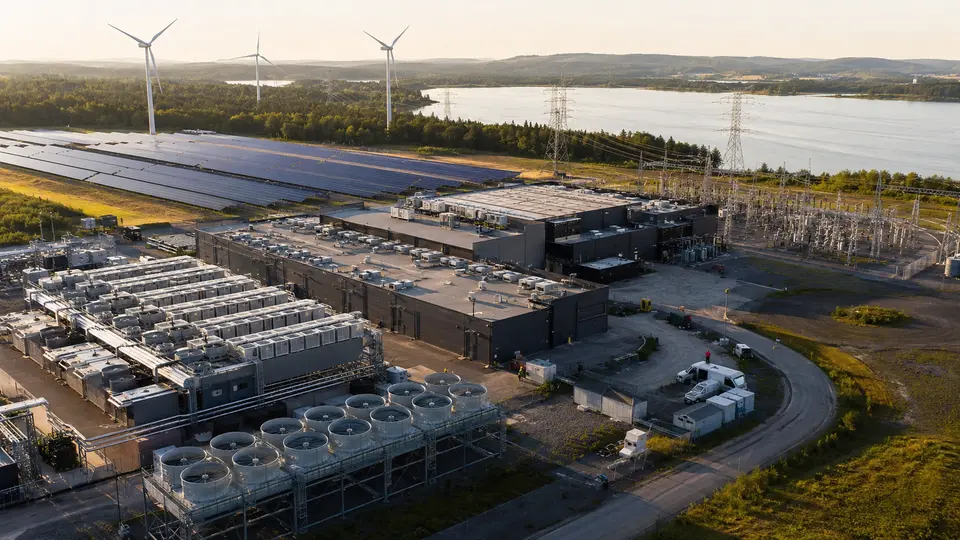 Conceptual visual
This is FUURAA’s own editorial analysis of the cited public source, prepared independently from the cited institution. Source materials remain attributable to their authors and publishers; FUURAA is responsible for their selection, synthesis and interpretation. No cited institution has reviewed or endorsed this article unless expressly stated.
External evidence
What the IEA report estimates
The IEA estimates that data centres consumed roughly 415 terawatt-hours of electricity in 2024, around 1.5% of global electricity use. Its base case projects demand of about 945 terawatt-hours in 2030, just under 3% of the global total.
The report examines accelerated servers, networks, cooling, generation and grid constraints. It also finds that renewables could meet nearly half of additional data-centre demand through 2035 in its base case, while regional impacts may be much more concentrated.
FUURAA editorial analysis
FUURAA editorial perspective
Evidence-led analysis in the public interest
AI infrastructure is not an abstract cloud. It is a chain of chips, buildings, electricity, water, cooling, networks and communities. Reliability and sustainability must be designed together.
Energy forecasts are scenarios, not fixed outcomes. Efficiency improvements, model design, hardware, regulation, grid investment and the geography of deployment can all change the path.
- AI scale is constrained and enabled by physical systems: chips, data centres, electricity, grids, cooling, networks, water and the communities around them.
- IEA scenarios indicate rapid demand growth, but they are not fixed outcomes; efficiency, deployment geography, grid investment and technology choices can materially alter the path.
- Responsible AI infrastructure should optimise useful service per unit of resource and disclose local as well as global impacts.
The cloud has a physical footprint
The IEA estimates that data centres used roughly 415 terawatt-hours of electricity in 2024, around 1.5% of global electricity use, and its base case reaches about 945 terawatt-hours in 2030, just under 3% of the global total. These estimates help establish scale, but global percentages alone can obscure local pressure. Data-centre demand can be concentrated where grid capacity, generation, cooling and network connections are limited. AI infrastructure should therefore be discussed as a physical chain of equipment, buildings, power and communities, not as an abstract service detached from place.
Forecasts describe pathways, not destiny
The report examines accelerated servers, networks, cooling, generation and grid constraints, and its base case indicates that renewables could meet nearly half of additional data-centre demand through 2035. A scenario is useful because it makes assumptions and interactions visible; it is not a promise that one result will occur. Model efficiency, hardware utilisation, cooling methods, electricity markets, regulation, construction timelines and user demand can all change realised consumption. FUURAA’s editorial view is that public debate should use forecasts for planning while stating their uncertainty, rather than treating one number as inevitable or dismissing the underlying infrastructure challenge.
Efficiency must be measured against useful outcomes
Efficiency gains can reduce resource use per task, but they may also support more total use when services become cheaper or more widely available. Measuring only model size or facility efficiency therefore gives an incomplete picture. Operators should consider useful work delivered per unit of compute and energy, system utilisation, the need for repeated inference and whether a simpler approach could meet the same purpose. Efficiency should also extend across the supply chain, while avoiding claims that one metric fully captures environmental performance. Different applications produce different social value, and that judgment should not be left to energy accounting alone.
Infrastructure decisions distribute benefits and burdens
A data centre can support digital services and investment while also competing for constrained grid capacity or other local resources. The balance will differ by location and cannot be resolved through a global average. Credible planning should involve utilities, governments, operators and affected communities, disclose relevant assumptions and provide routes to address operational concerns. Grid-aware siting and scheduling may help align demand with available capacity, but technical optimisation does not replace public decision-making. Sustainable scale will require reliability, affordability, resilience and environmental responsibility to be considered as one system.
Alternative views & uncertainty
What this evidence does not settle
- AI can support energy-system analysis and other useful services, yet prospective benefits should not be used to excuse avoidable resource waste or opaque infrastructure decisions.
- Restrictive limits may reduce local pressure but can shift facilities elsewhere; coordinated standards and better disclosure may be more effective than isolated measures alone.
Public-interest implications
What this means for different stakeholders
Communities need accessible information about proposed infrastructure, local resource constraints, expected benefits and meaningful channels for participation or complaint.
Developers and operators should improve utilisation, choose fit-for-purpose models and hardware, plan with grid conditions and obtain credible resource data from suppliers.
Authorities should coordinate energy, digital, planning and environmental policy, assess concentrated local effects and avoid relying solely on global averages.
Analysis should compare scenarios, workloads and regions while improving measurement of energy, cooling, water, reliability and useful service outcomes.
What to watch next
- How actual data-centre electricity demand compares with the IEA scenarios as efficiency, deployment and user demand evolve.
- Whether public reporting becomes comparable across operators without concealing important local differences.
- How grid upgrades, renewable generation, cooling and siting decisions affect reliability, cost and community acceptance.
The IEA report makes clear that AI development sits on a material foundation whose constraints cannot be solved by language models alone. Electricity demand may grow rapidly, but its scale and consequences will depend on choices made across software, hardware, facilities, grids and public policy. The appropriate response is neither to deny AI’s potential nor to treat expansion as physically automatic. It is to build infrastructure that is efficient, transparent, resilient and accountable to the places where it operates.
This is FUURAA’s independent editorial analysis of the cited International Energy Agency report. It does not imply IEA approval, participation or endorsement, and scenario figures are presented as the report’s estimates rather than FUURAA forecasts.
Forward view
Infrastructure questions for the AI era
Efficiency by design
Measure useful work per unit of compute and energy—not only model size.
Grid-aware deployment
Location and timing should reflect available power, network capacity and community impact.
Transparent accounting
Organisations need credible energy, water and emissions data across infrastructure suppliers.
Continue reading
Related insights
17 February 2026
Why AI Agents Need Infrastructure, Not Only Stronger Models
NIST’s 2026 AI Agent Standards Initiative puts interoperability, open protocols, security and agent identity at the centre of trusted adoption.Read insight →
18 March 2025
The AI Economy Is Also a Five-Layer Supply Chain
A paper published in the BIS Papers series maps AI through hardware, cloud infrastructure, training data, foundation models and applications, highlighting concentration and resilience risks.Read insight →
24 April 2025