 Research Brief
Agent Infrastructure · 17 February 2026

Research domain 01
We study the architectures, protocols and operating conditions that allow AI Agents to plan, use tools, collaborate and recover safely across long-running tasks.
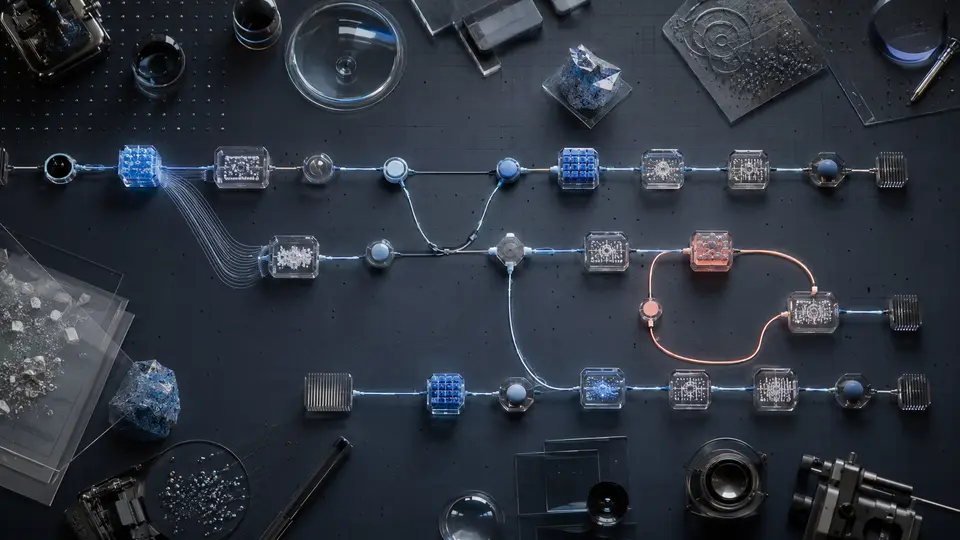 FUURAA conceptual visual
Open research questions
Reference points
These sources are independent references. Listing does not imply collaboration, approval or endorsement.
Interoperability, open protocols, security and agent identity.
Open canonical source ↗02Stanford HAIEvidence that more agents do not automatically produce better outcomes.
Open canonical source ↗03Singapore IMDAPractical boundaries, safeguards and human accountability.
Open canonical source ↗Related publications
Research BriefAgent Infrastructure · 17 February 2026
 Research Brief
Multi-Agent Systems · 1 June 2026
 External Research Review
Responsible AI · 20 May 2026
Live evidence radar
SubtleMemory tests whether agents distinguish complementary, nuanced and contradictory memories instead of retrieving isolated similar passages.
→FUURAA forecasts mappings that let one well-structured evidence set support several national, sectoral and voluntary reporting systems.
→Agent behaviour can change with context, tools and external data, so pre-release testing cannot cover every operational condition.
→Reliable deployment requires records showing what an agent saw, decided, called and changed, especially for consequential tasks.
→FUURAA expects broad principles to be translated into sector-specific controls for health, finance, education and public services.
→FUURAA forecasts recurring learning for students, workers, managers and older adults as tools and social expectations keep changing.
→Figure demonstrates two humanoids completing a shared room-reset task without explicit message passing or a central planner.
→Observation-based teamwork can be flexible, but shared spaces introduce uncertainty about intent, timing and collision risk.
→Keep the question open
Researchers, engineers, universities and public institutions may propose sources, corrections or areas for structured review.