 Research Brief
Digital Identity & Trust · 15 May 2025

Research domain 02
We examine machine-readable identity, authority, provenance, long-term memory and the relationships that allow an AI system to remain useful without losing privacy, context or accountability.
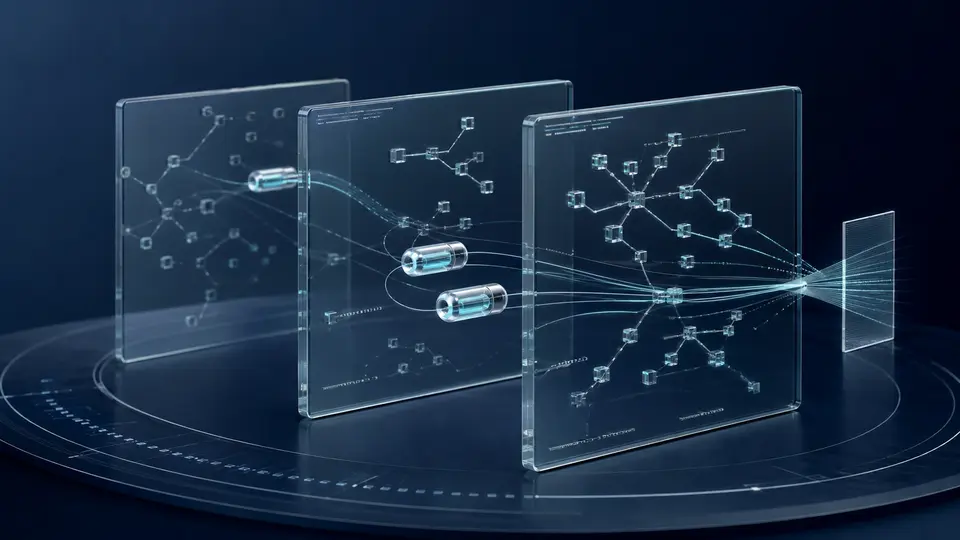 FUURAA conceptual visual
Open research questions
Reference points
These sources are independent references. Listing does not imply collaboration, approval or endorsement.
An interoperable, privacy-aware foundation for machine-verifiable claims.
Open canonical source ↗02NISTPublic standards work connecting identity, authorisation and secure adoption.
Open canonical source ↗03FUURAA Frontier LibraryA bilingual evidence trail maintained from checked primary sources.
Open canonical source ↗Related publications
Research BriefDigital Identity & Trust · 15 May 2025
 Research Brief
Memory & Long Context · 24 April 2025
 Research Brief
Agent Infrastructure · 17 February 2026
Live evidence radar
SubtleMemory tests whether agents distinguish complementary, nuanced and contradictory memories instead of retrieving isolated similar passages.
→Persistent assistants accumulate records that may diverge as people, plans and circumstances change.
→The benchmark separates preservation, retrieval and reasoning stages, showing that successful storage alone does not ensure correct assistance.
→A majority of surveyed young users had not told anyone they were using chatbots for mental-health advice.
→FUURAA forecasts consent-based ways for users to share relevant chatbot interactions with clinicians without exposing entire private histories.
→Common reporting fields make it easier to compare risk assessment, security, accountability and transparency practices across organisations.
→The framework invites organisations to refresh disclosures each year, recognising that models, uses and controls evolve.
→As autonomous search contributes to consequential engineering and scientific results, knowing which model, prompt, evaluator, data and human decision produced a method becomes part of its credibility.
→Keep the question open
Researchers, engineers, universities and public institutions may propose sources, corrections or areas for structured review.