Technical mechanism
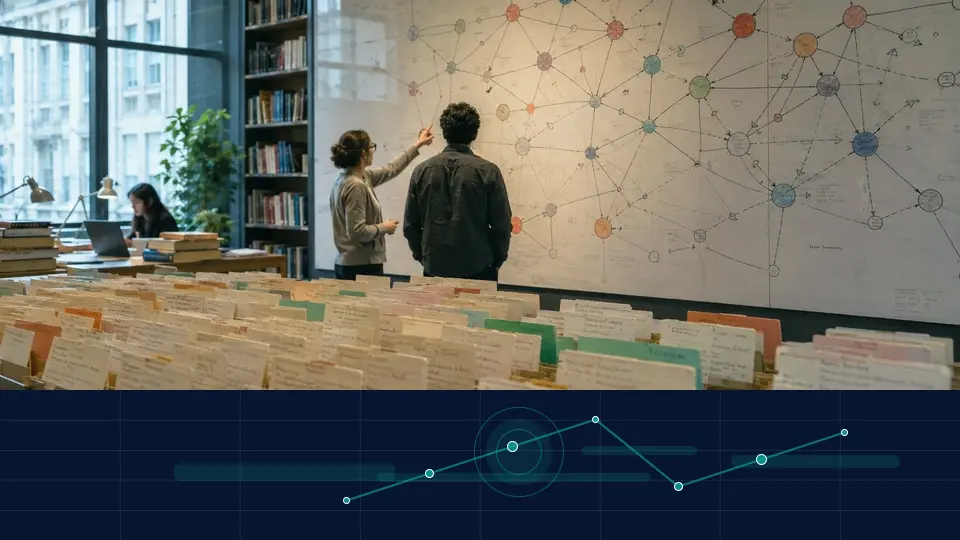
Hybrid lexical, vector and graph retrieval identifies candidate evidence, then reranking, permission filters and citation assembly select context for a user or model.

Technology topic profile
Definition & scope
Data quality, provenance, retrieval, identity and durable memory determine what an intelligent system knows, what it may do and whether its actions can be understood later.
FUURAA examines “Intelligent search and retrieval” through its technical mechanism, deployment infrastructure, evidence requirements and public-interest consequences. This profile separates what can be demonstrated from what still requires field validation.
This is a technology and opportunity profile. It does not announce a current FUURAA product, ownership position, partnership, investment or transaction.
System map
Technical capability, enabling infrastructure, evidence and governance must be considered together.
Hybrid lexical, vector and graph retrieval identifies candidate evidence, then reranking, permission filters and citation assembly select context for a user or model.
Pipelines, catalogues, semantic layers, retrieval systems, identity services, consent records and retention controls form a governed knowledge fabric.
Testing should measure retrieval relevance, answer grounding, freshness, citation fidelity, access-control enforcement and robustness to ambiguous or adversarial queries.
Poisoned or stale documents can dominate retrieval, permission errors may expose restricted information, and polished citations can lend false authority to unsupported conclusions. System-wide governance also requires: Privacy, purpose limitation, access rights, deletion, authenticity and durable accountability become harder as data is copied, summarised and remembered.
Application contexts
Examine how “Intelligent search and retrieval” could create measurable value in “Enterprise knowledge”, which supporting systems are required and where human responsibility must remain explicit.
Application contextExamine how “Intelligent search and retrieval” could create measurable value in “Trusted records”, which supporting systems are required and where human responsibility must remain explicit.
Application contextExamine how “Intelligent search and retrieval” could create measurable value in “Personal continuity”, which supporting systems are required and where human responsibility must remain explicit.
Selected evidence record
FUURAA summarises and analyses; original institutions retain ownership of their work and have not reviewed or endorsed this page.
Causal retrieval
FUURAA synthesisThe study reports that memory systems lose causal and objective information when they rely heavily on lossy similarity retrieval.
Long-horizon agents will combine semantic search with event graphs, goals and causal links.
Diligence questions
A credible technology profile should make it easier to identify evidence, dependencies, boundaries and unanswered questions.
What evidence would distinguish a controlled demonstration of “Intelligent search and retrieval” from dependable operation?
Which technical dependency or operational bottleneck most constrains performance at scale?
Which failure or harm described in this profile should trigger suspension, escalation or human review?
Which cost, performance, safety or interoperability result would invalidate the current adoption thesis?
FUURAA outlook
Data systems are evolving from passive repositories into active context infrastructure that serves people and Agents while preserving provenance and control. For “Intelligent search and retrieval”, credible progress should therefore be judged by verified outcomes, system resilience, responsible adoption and the ability to correct course—not by novelty alone.
This outlook is an editorial assessment, not a market forecast, investment recommendation or product timetable.What We Build