Technical mechanism
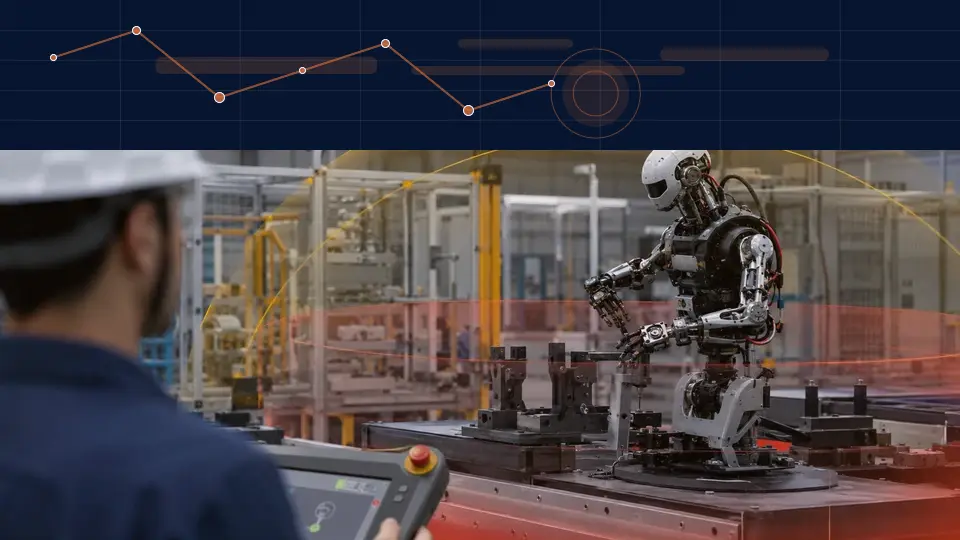
Teleoperation combines low-latency bidirectional communication, operator interfaces, haptic or visual feedback, shared autonomy and enforced safety envelopes.

Technology topic profile
Definition & scope
Robotics brings models into contact with people, workplaces and unpredictable environments. Progress depends on sensing, manipulation, control, safety and the ability to learn from reality.
FUURAA examines “Teleoperation and human–robot safety” through its technical mechanism, deployment infrastructure, evidence requirements and public-interest consequences. This profile separates what can be demonstrated from what still requires field validation.
This is a technology and opportunity profile. It does not announce a current FUURAA product, ownership position, partnership, investment or transaction.
System map
Technical capability, enabling infrastructure, evidence and governance must be considered together.
Teleoperation combines low-latency bidirectional communication, operator interfaces, haptic or visual feedback, shared autonomy and enforced safety envelopes.
Sensors, actuators, compute, simulation, teleoperation, fleet operations, maintenance and safe work-cell design turn a robot demonstration into a service.
Validation should stress latency, jitter, packet loss and handover while measuring operator workload, command accuracy, emergency stopping and safe degraded operation.
Primary risks are communication loss, malicious takeover, operator fatigue, mode confusion and unclear authority during transitions between human and autonomous control. System-wide governance also requires: Physical action raises requirements for fail-safe behaviour, human authority, workplace safety, liability, cybersecurity and responsible data collection.
Application contexts
Examine how “Teleoperation and human–robot safety” could create measurable value in “Factories”, which supporting systems are required and where human responsibility must remain explicit.
Application contextExamine how “Teleoperation and human–robot safety” could create measurable value in “Care settings”, which supporting systems are required and where human responsibility must remain explicit.
Application contextExamine how “Teleoperation and human–robot safety” could create measurable value in “Mobility and logistics”, which supporting systems are required and where human responsibility must remain explicit.
Selected evidence record
FUURAA summarises and analyses; original institutions retain ownership of their work and have not reviewed or endorsed this page.
Industrial robot safety
FUURAA synthesisThe third edition of ISO 10218-1 updates safety requirements for industrial robots as machines before system integration.
Robot manufacturers should align risk reduction, design evidence and user information early, not at final certification.
Diligence questions
A credible technology profile should make it easier to identify evidence, dependencies, boundaries and unanswered questions.
What evidence would distinguish a controlled demonstration of “Teleoperation and human–robot safety” from dependable operation?
Which technical dependency or operational bottleneck most constrains performance at scale?
Which failure or harm described in this profile should trigger suspension, escalation or human review?
Which cost, performance, safety or interoperability result would invalidate the current adoption thesis?
FUURAA outlook
Progress will depend less on isolated demonstrations and more on generalisation, dependable operations, affordable maintenance and evidence accumulated in real environments. For “Teleoperation and human–robot safety”, credible progress should therefore be judged by verified outcomes, system resilience, responsible adoption and the ability to correct course—not by novelty alone.
This outlook is an editorial assessment, not a market forecast, investment recommendation or product timetable.What We Build